Measurements at the Mauna Loa Observatory stopped after the 2022 eruption of the Mauna Loa volcano, when lava flow crossed the access road and took out power lines to the facility. The observatory remains inaccessible by vehicle and without power from the local utility company.
Observatory staff has established limited solar power in four observatory buildings and restored approximately 33 percent of the measurements onsite, including the Global Monitoring Laboratory and Scripps critical CO2 records and other atmospheric measurements.
Media can contact: Theo Stein (303) 819-7409 (theo.stein@noaa.gov) or Karin Vergoth 303-632-6413 (karin.vergoth@noaa.gov)
 US Environmental Protection Agency (EPA) / National Exposure Research Laboratories (NERL) / Human Exposure and Atmospheric Sciences Division (HEASD)
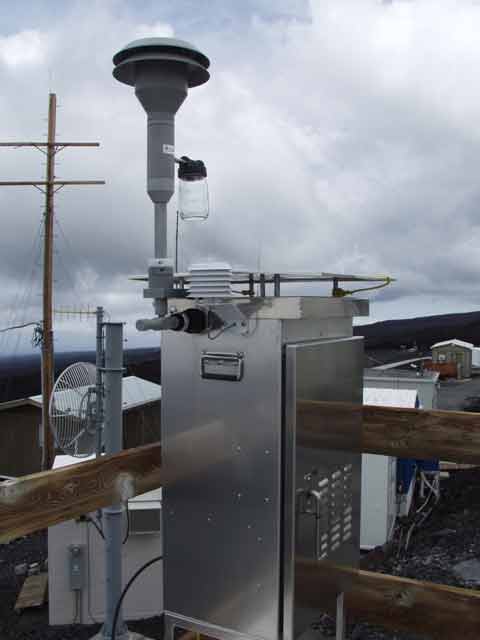
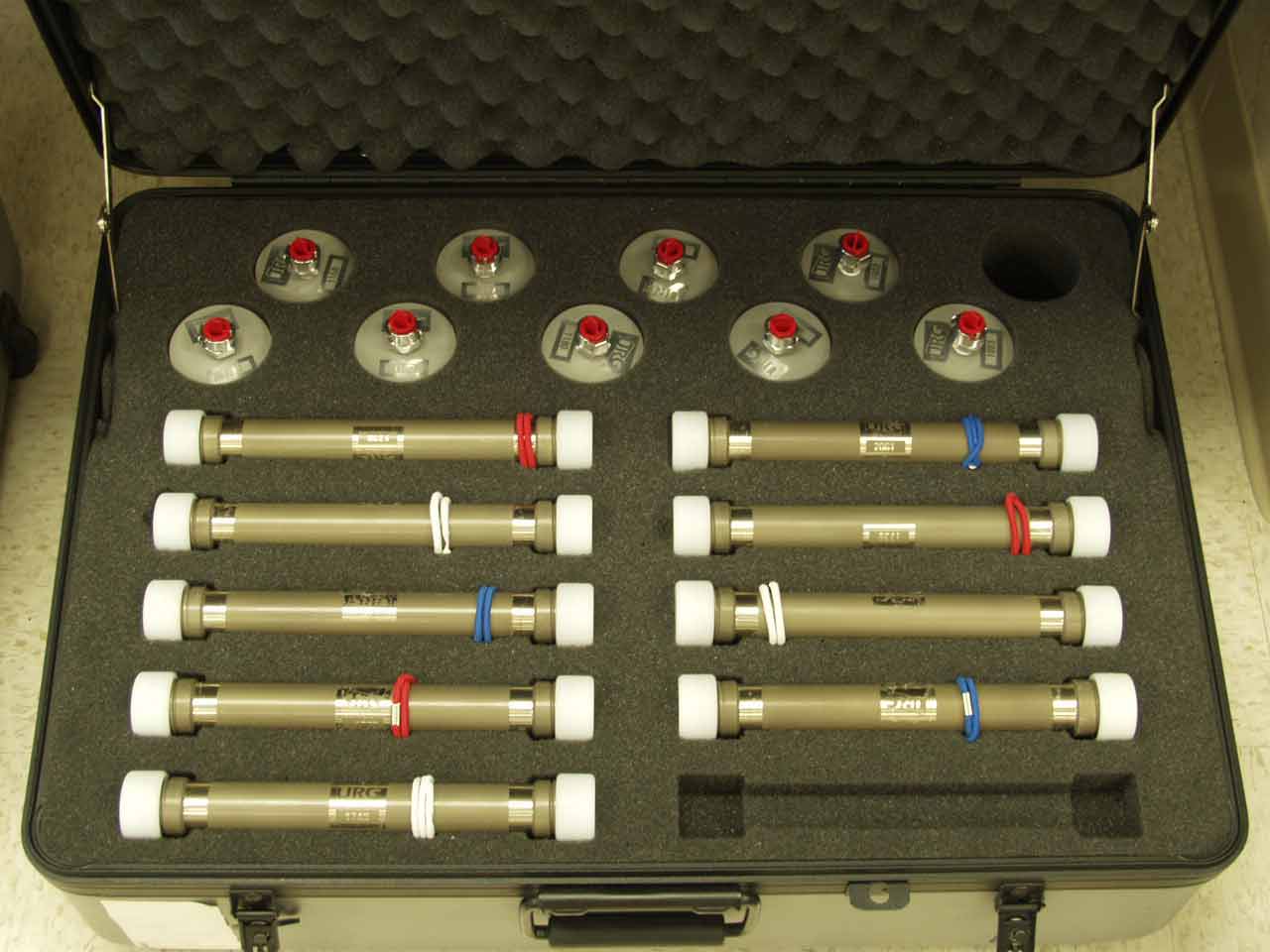
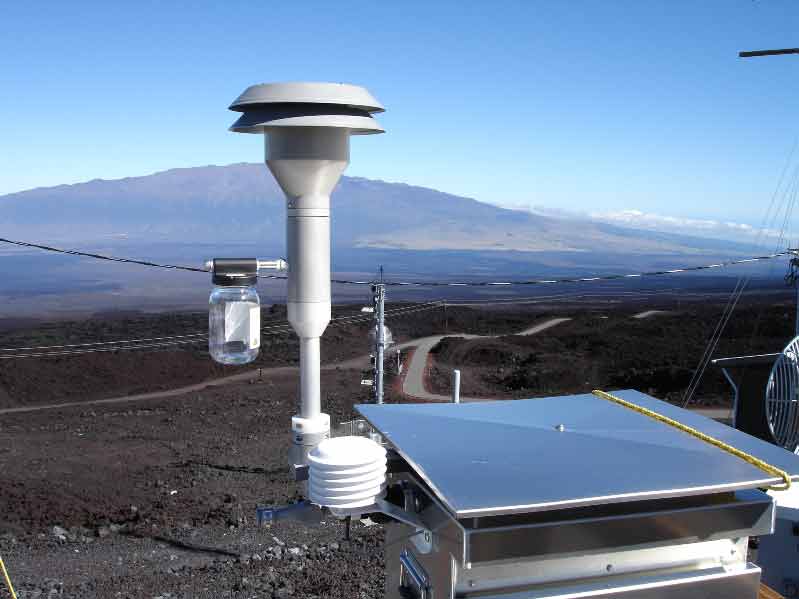
The EPA Sequential Fine Particle Sampler is a gaseous sampler that tests for metals and compounds in the air. It collects cations of Lithium, Sodium, Ammonium, Potassium, Magnesium, and Calcium and anions of Fluoride, Chloride, Nitrite, Bromide, Nitrate, Phosphate, and Sulfate.
A URG automated sequential fine particle sampler (SFPS) collection system capable of collecting a minimum of seven days of gas and particulate samples without operator assistance. EPA-approved 47mm Teflon filters with unique identification numbers are stamped on the polypropylene support ring, and 242 mm multi-channel annular denuders are prepared, sampled, and analyzed in a manner consistent with EPA method IO-4. The filters are extracted in 5 ml of deionized water in a glove bag. The filter extract is introduced into a DIONEX ICS-90 ion chromatographic system for the quantification of major anions and cations. (e.g. halides).
The objective is to accumulate a long-term record of gas and fine (<2.5 µm) particulate halide chemistry to support atmospheric mercury chemistry research.
Dr Matthew S. Landis
919-541-4841
Aidan Colton
808-933-6965 (x233)
Alan M Yoshinaga
808-933-6965
May 29, 2003
EPA Aethalometer
EPA Mercury Monitoring
EPA Mercury Precipitation
EPA Ambient Ion Monitor
EPA Dichotomous Partisol
EPA Sulfur Dioxoide
EPA Surface Ozone