Measurements at the Mauna Loa Observatory stopped after the 2022 eruption of the Mauna Loa volcano, when lava flow crossed the access road and took out power lines to the facility. The observatory remains inaccessible by vehicle and without power from the local utility company.
Observatory staff has established limited solar power in four observatory buildings and restored approximately 33 percent of the measurements onsite, including the Global Monitoring Laboratory and Scripps critical CO2 records and other atmospheric measurements.
Media can contact: Theo Stein (303) 819-7409 (theo.stein@noaa.gov) or Karin Vergoth 303-632-6413 (karin.vergoth@noaa.gov)
 National Oceanic and Atmospheric Administration (NOAA),
Earth System Research Laboratory (ESRL)
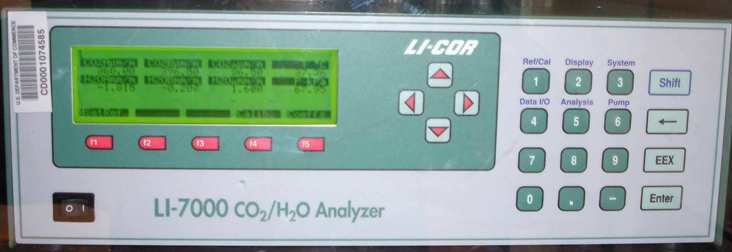
Carbon Dioxide (CO2) is measured in parts-per-million (ppm) and reported in units of micromol mol-1 (10-6 mol CO2 per mol of dry air). Measurements are directly traceable to the WMO CO2 mole fraction scale.
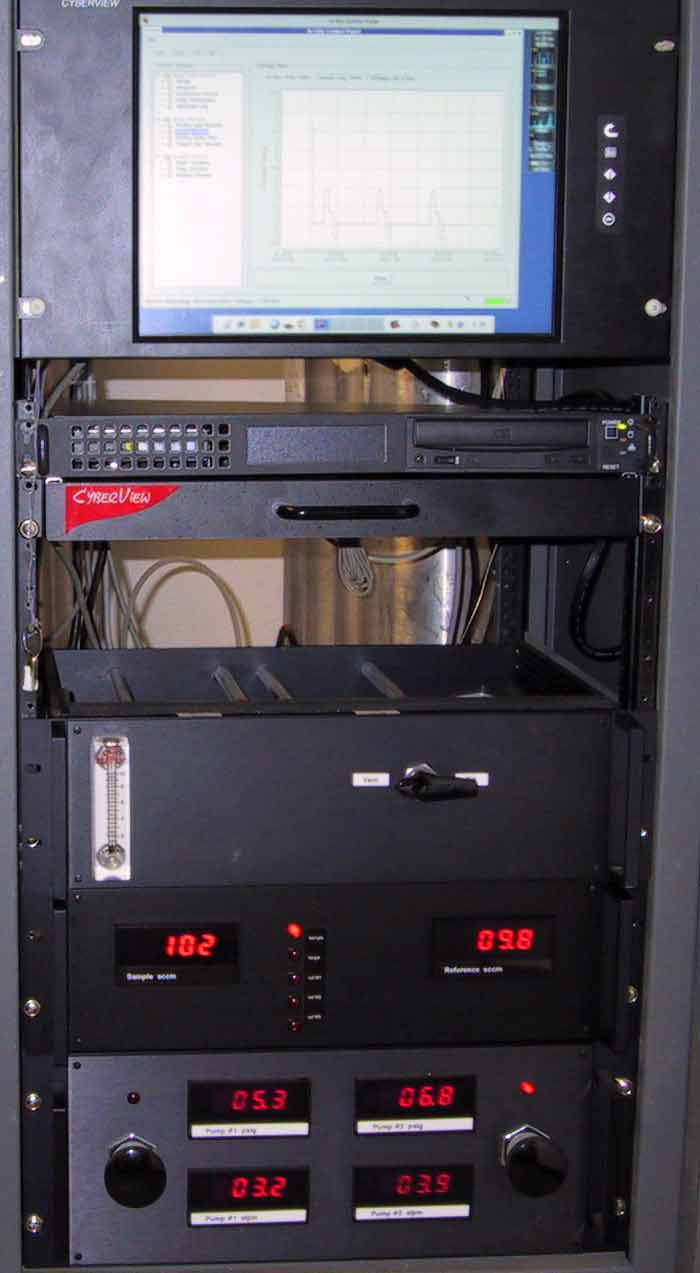
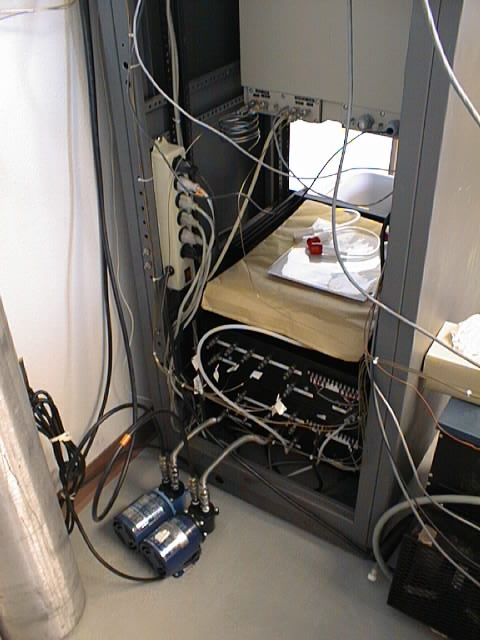
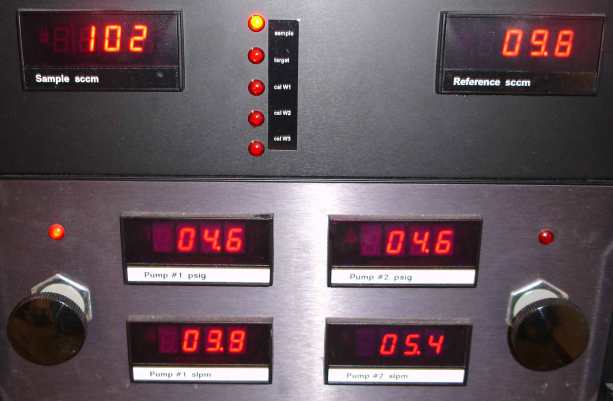
Carbon dioxide (CO2) in ambient and standard air samples is detected using a non-dispersive infrared (NDIR) analyzer. The measurement of CO2 in air is made relative to reference standards whose CO2 mixing ratio is determined with high precision and accuracy. Ambient air samples are bracketed by a pair of reference standards every hour to correct for non-linearity in detector response.
Mauna Loa observatory has grown to become the premier long-term atmospheric monitoring facility on Earth and is the site where the ever-increasing concentrations of global atmospheric carbon dioxide were discovered.
Please note: Much more information is available from the ESRL GMD Carbon Cycle - Greenhouse Gases group. The results below are a small sample of the results available at that site.
The plot below shows the daily average time-series from air sampled semi-continuously at MLO. A smooth curve and long-term trend are fitted to the average values when sufficient data exist.
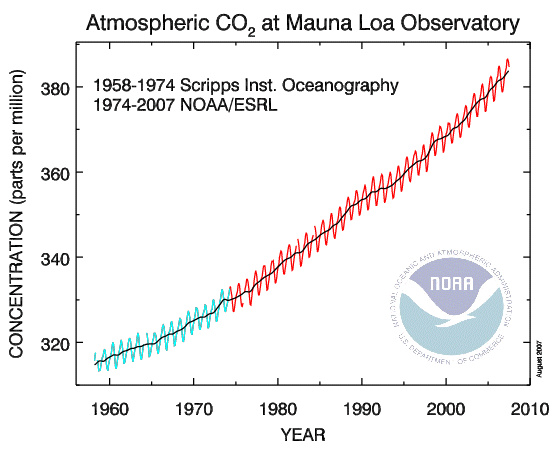
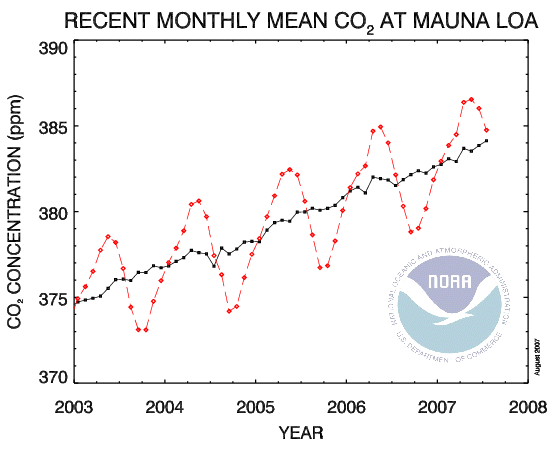
The seasonal cycle at MLO is shown in more detail in the plots below. In the top plot, the solid black line is the average seasonal cycle determined from the observations (where the monthly means are aggregated), the solid red box is the standard error of each aggregate monthly mean value (an estimate of the uncertainty), the red whisker around the standard error box is the standard deviation of each aggregated monthly mean value (a measure of the year-to-year variability in mean monthly values), and the blue line is the average seasonal cycle determined from the reference Marine Boundary Layer (MBL) time series at the same latitude.
The bottom plot shows the difference between the average seasonal cycle derived from the data and that derived from the MBL reference. The average offset in the two time series has been preserved in the difference.

The NOAA ESRL GMD Carbon Cycle-Greenhouse Gases group (CCGG) conducts research to understand the global carbon cycle and its effects on climate. At CCGG measurements are made to determine baseline levels, trends and causes of variability of several atmospheric gases (carbon dioxide, methane and carbon monoxide), that have the potential to affect global climate.
To obtain detailed understanding of the short term as well as long term variations of the greenhouse gases, CCGG makes on-site measurements at the four NOAA/GMD baseline observatories, which are far from any pollution sources affecting the gases of interest.
Kirk Thoning
303-497-6078
Aidan Colton
808-933-6965 (x233)
Paul Fukumura
808-933-6965 (x223)
http://gml.noaa.gov/ccgg/index.html
05-17-1974
In Situ Carbon Monoxide
In Situ Methane
Cooperative Global Air Sampling
Greenhouse Gases