Measurements at the Mauna Loa Observatory stopped after the 2022 eruption of the Mauna Loa volcano, when lava flow crossed the access road and took out power lines to the facility. The observatory remains inaccessible by vehicle and without power from the local utility company.
Observatory staff has established limited solar power in four observatory buildings and restored approximately 33 percent of the measurements onsite, including the Global Monitoring Laboratory and Scripps critical CO2 records and other atmospheric measurements.
Media can contact: Theo Stein (303) 819-7409 (theo.stein@noaa.gov) or Karin Vergoth 303-632-6413 (karin.vergoth@noaa.gov)
 CSIRO (Commonwealth Scientific and Industrial Research Organization) Atmospheric Research
CSIRO measures the following greenhouse gases (units of measurement are micromol per mol of dry air for Carbon Dioxide, and nanomol per mol of dry air for the others. The isotope ratios are measured per mil):
The trace gas mixing ratios are measured by the technique of gas chromatography; isotope ratios are measured with a stable isotope ratio mass spectrometer.
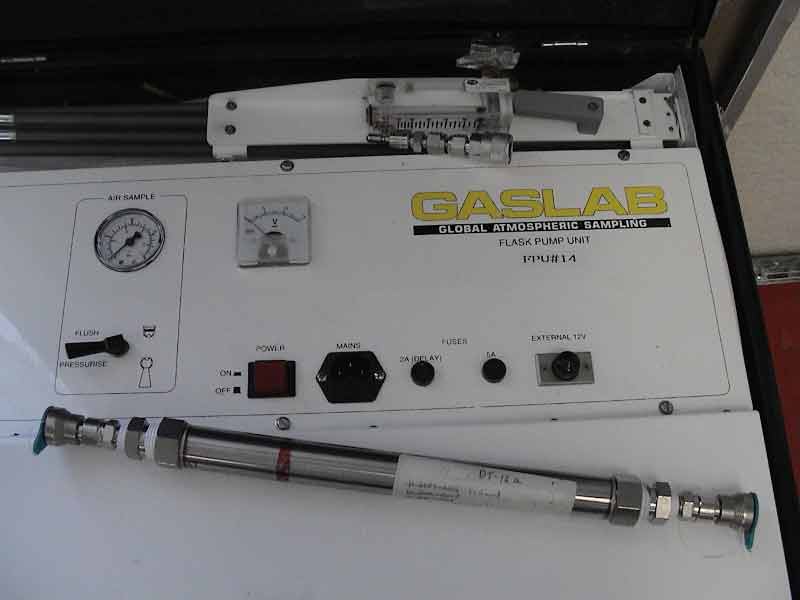
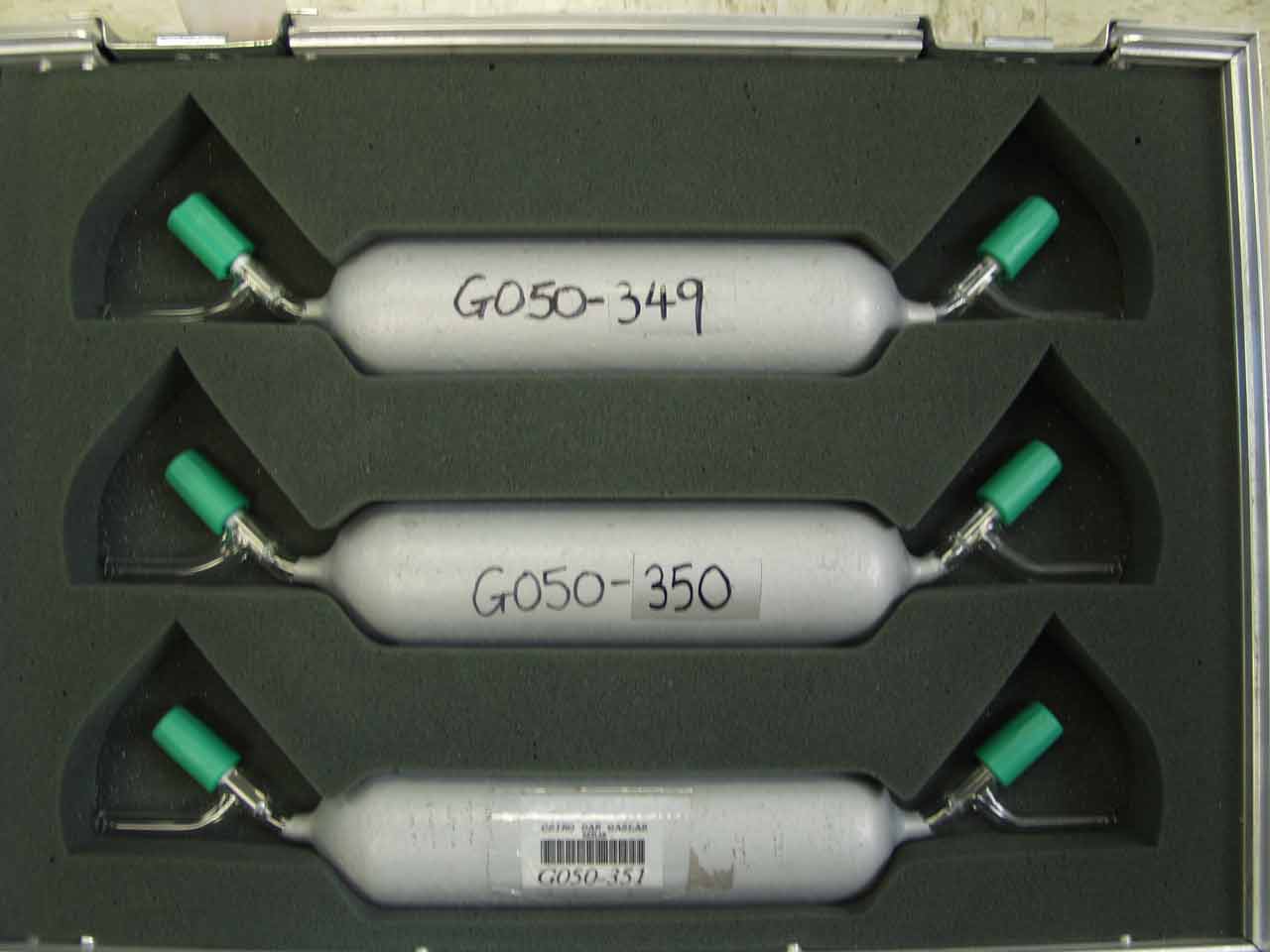
3 pairs of glass flasks are collected per month. CSIRO provides the glass flasks which are flushed and then pressurized with ambient air using a CSIRO-supplied pump. Sampling times are selected to maximize the probability of sampling undisturbed troposphere background air. Similar samples are collected at the other CMDL observatories (Point Barrow observatory, Trinidad Head observatory, Samoa observatory, South Pole Observatory). View the ESRL observatory information web page.
These trace species are being measured to better understand the processes underlying the long-term changes in the atmospheric abundances of these radiatively (and hence climatically) and chemically active trace species.
Another purpose of this project is to obtain values of the ratio 13C/ 12C in atmospheric CO2 at MLO and other locations for applications in modeling the global carbon cycle.
Yes, there are trends in all species. The major greenhouse gases (CO2, CH4, N2O) are all increasing in abundance, although a pause in the growth of CH4 has been observed since 1999.
These measurements of trace species in air samples collected at Mauna Loa Observatory are part of a global network of such observations.
Trace species data from this measurement program at the Mauna Loa Observatory are regularly submitted to international archives for such data (eg. CDIAC, at Oak Ridge, Tennessee, USA)
Please see: Langenfelds, R.L., R.J. Francey, B.C. Pak, L.P. Steele, J. Lloyd, C.M. Trudinger, & C.E. Allison, Interannual growth rate variations of atmospheric CO2 and its 13C, H2, CH4, and CO between 1992 and 1999 linked to biomass burning, Global Biogeochemical Cycles, Vol. 16, No. 3, 1048, doi:10.1029/2001 GB001466, 2002.
Dr Paul Steele
011-613-9239-4578
Lisa Cooper
Steve Ryan
808-933-6965 (x235)
Paul Fukumura
808-933-6965 (x223)
1984