Measurements at the Mauna Loa Observatory stopped after the 2022 eruption of the Mauna Loa volcano, when lava flow crossed the access road and took out power lines to the facility. The observatory remains inaccessible by vehicle and without power from the local utility company.
Observatory staff has established limited solar power in four observatory buildings and restored approximately 33 percent of the measurements onsite, including the Global Monitoring Laboratory and Scripps critical CO2 records and other atmospheric measurements.
Media can contact: Theo Stein (303) 819-7409 (theo.stein@noaa.gov) or Karin Vergoth 303-632-6413 (karin.vergoth@noaa.gov)
 National Oceanic and Atmospheric Administration (NOAA),
National Climatic Data Center
National Oceanic and Atmospheric Administration (NOAA),
National Climatic Data Center
The U.S. Climate Reference Network (USCRN) is a network of climate stations now being developed as part of a National Oceanic and Atmospheric Administration (NOAA) initiative. Its primary goal is to provide future long-term homogeneous observations of temperature and precipitation that can be coupled to long-term historical observations for the detection and attribution of present and future climate change.
The USCRN intrument suite is designed to measure the following climate related parameters:
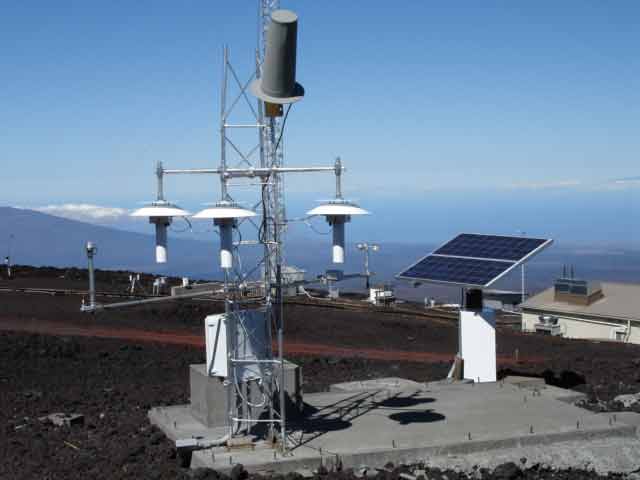
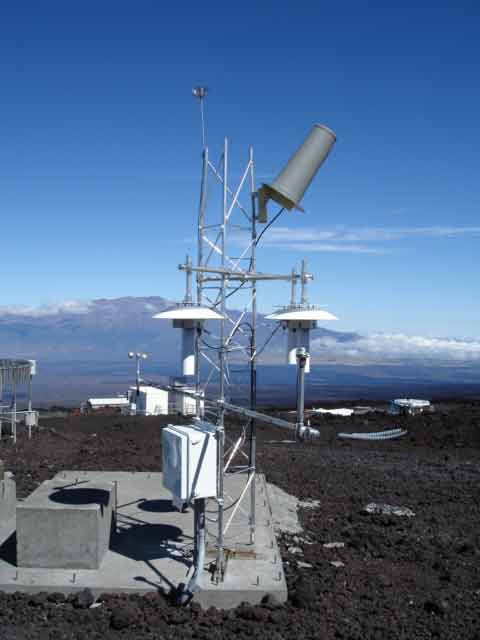
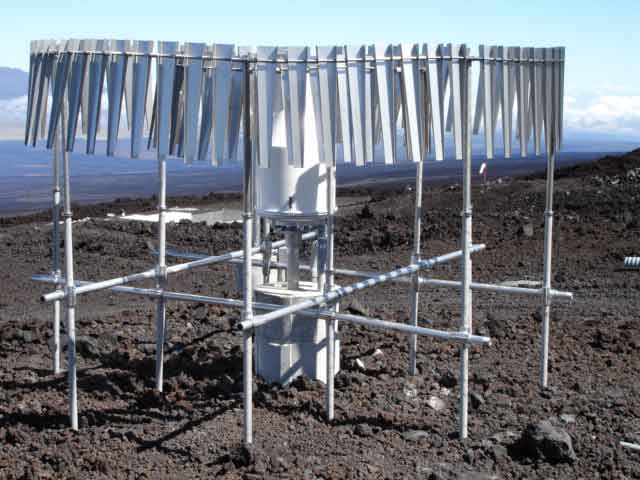
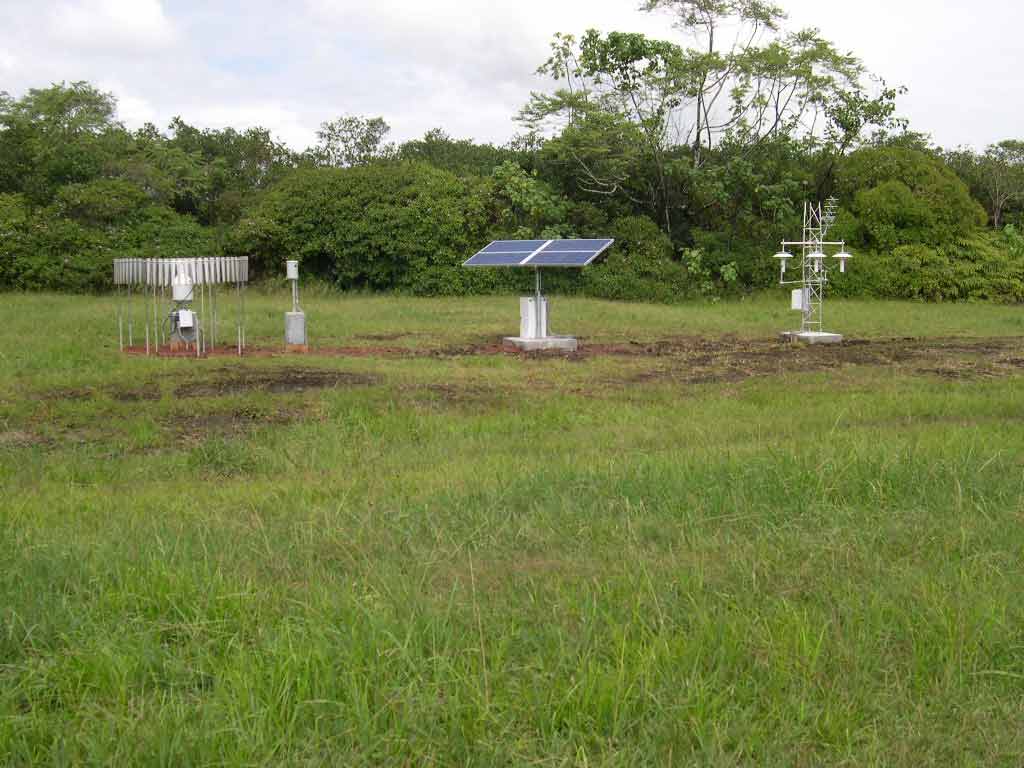
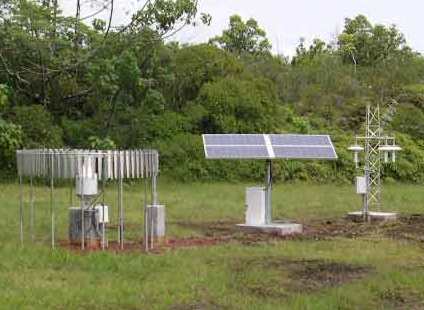
Every USCRN observing site is equipped with a standard set of sensors, a data logger and a satellite communications transmitter, and at least one weighing rain gauge encircled by a wind shield.
The sensors are placed on a typical 3 meter (10 ft.) instrument tower at 1.5 meters (4.5 ft.) above the surface of the ground.
The hourly observations and the fifteen minute precipitation data are stored in a data logger attached to the tower. A GOES satellite transmitter sends the data to the National Climatic Data Center where the data undergo a quality control check and are placed on the Web several times a day.
Data from the USCRN will be used in operational climate monitoring activities and for placing current climate anomalies into an historical perspective.
Hourly data is made available by the USCRN at http://www.ncdc.noaa.gov/crn/hourly
As stated above, the primary goal of this program is to provide future long-term homogeneous observations of temperature and precipitation that can be coupled to long-term historical observations for the detection and attribution of present and future climate change.
The photos on this page are property of NOAA Mauna Loa Observatory, but the information here has been taken from the USCRN website at http://www.ncdc.noaa.gov/crn/
Bruce Baker
828-271-4018
Mark Hall (lead engineer)
865-576-0366
Dr. John E Barnes
808-933-6965 (x222)
Trevor Kaplan
808-933-6965 (x226)
www.ncdc.noaa.gov/oa/
climate/uscrn/
2005