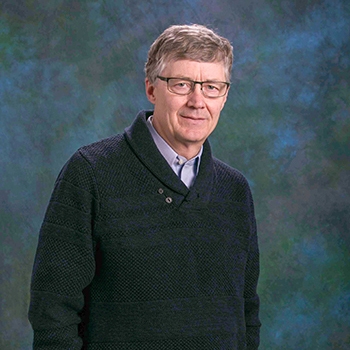
David W Fahey
Director, NOAA Chemical Sciences Laboratory
Office of the Director
NOAA Chemical Sciences Laboratory
325 Broadway, R/CSL
Boulder, CO 80305 USA
720-712-8772
David.W.Fahey@noaa.gov
he / him / his What is this?
Affiliation
NOAA
Dr. David W. Fahey is the Director of the Chemical Sciences Laboratory in the National Oceanic and Atmospheric Administration in Boulder, Colorado, USA. He joined the Laboratory after receiving advanced degrees in physics. The Laboratory's mission is to advance scientific understanding of climate change, air quality and stratospheric ozone through research on the chemical and physical processes that affect Earth’s atmospheric composition. He serves the Montreal Protocol as a Co-Chair of its Scientific Assessment Panel which produces the quadrennial assessments of stratospheric ozone depletion. He has authored other major assessments on the topics of climate change, black carbon and aviation to address their roles in the climate system and was a lead author of the 2017 Climate Science Special Report of the National Climate Assessment. He has received distinctions from the U. S. Department of Commerce, the Environmental Protection Agency, the American Meteorological Society, the American Geophysical Union, and the United Nations Environment Program.
Education
PhD - University of Missouri-Rolla
BA - University of Wisconsin-Madison
Current Topics
- Scientific analysis and assessment of issues related the Montreal Protocol on Substances that Deplete the Ozone Layer.
- Scientific analysis and assessment of the impact of aviation on future climate understanding.
- Geoengineering of climate through solar radiation management.
- Water vapor measurements in the upper troposphere and lower stratosphere.
- Design and construction of the next generation detectors for atmospheric composition for use on manned and unmanned airborne platforms.
- Use of NASA's Global Hawk Unmanned Aircraft System (UAS) for Earth science research.

last modified: December 14, 2020